A Life Declassified
/
The Central Intelligence Agency was tasked with supporting officials investigating the assassination of President John F. Kennedy. The first person delegated to lead this effort used the professional alias John Scelso but his supervisory position was short lived. He wanted to dispel stories that some officials wanted to believe and sought more information about Lee Harvey Oswald than other superiors desired. Despite claims his short inquiry lacked quality, the Agency sought him for testimony before congressional investigators nearly a decade after he retired. The alias John Scelso protected his identity for decades until his true name was revealed by a congressional act to declassify files.
The Federal Bureau of Investigation led the initial probe of the Kennedy assassination and the Agency was instructed to support them. Its Director John McCone ordered subordinates to “see that the investigation and the review of the CIA’s relationship, if any, with Oswald were thoroughly studied and all relevant matters conveyed to the Warren Commission.”i McCone would put Deputy Director for Plans Richard Helms in charge of conducting the “daily management of the Agency’s assassination related activities”. Helms “designated the chief of the Mexican branch in Western Hemisphere Division, John Whitten to run the CIA’s initial collection and dissemination efforts.” John Moss Whitten aka John Scelso was in his early forties when officials tasked him to support FBI and President’s (Warren) Commission investigators.
Richard Helms also placed Birch O’Neal, a Counterintelligence Staff Special Investigations Group (CISIG) officer, “...to handle liaison with the FBI.” O’Neal was a former Bureau special agent and later became a Counterintelligence Staff investigator. This split the loyalties of these key appointments and O’Neal was just one counterintelligence staff member eventually influencing the affair. Whitten had principal responsibility over the CIA’s efforts between the assassination and the early days of the President’s (Warren) Commission. He studied classified documents and consulted with some involved officers to construct a rough sequence of events in less than a month. However, this study did not conform with the CI Staff’s desires or its leadership’s agenda.
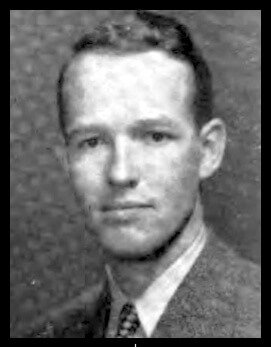
JOHN MOSS WHITTEN CIRCA 1947
Whitten notes that no Agency source had ever observed Lee Oswald in Mexico City.ii A finding which disrupted CIA leaders attempting to place Oswald in related Communist embassies and manufacture a plausible motive. The same draft report dismissed claims KGB officer Valeriy Kostikov was involved and states “No clue was found linking him to the assassination or to anything remotely related to it.”iii The inspection contained a portion titled “The Fabricators” to note false leads offered during his tenure, leads some in the CIA would have used to support the official story. In a fairly brief period these efforts had already clarified matters officials debated several times in following years. This afforded John Whitten a significantly limited inspection before “the CI Staff got involved.”iv
Agency Counterintelligence Staff member Raymond Rocca acting under its mercurial leader James Angleton wanted to take over. Angleton and his cadre of subordinates were among the most conspiratorially minded people in the CIA. Handing the CI Staff control would essentially render the results that Angleton or his superiors desired. John Whitten it seems had asked too many of the right questions. “After Whitten issued a report in December on Oswald’s activities in Mexico City, Helms-at James Angleton’s request, according to Whitten-shifted responsibility for the Agency support for the FBI and the Warren Commission to the CI Staff.” This reassignment according to Richard Helms was because Whitten’s preliminary findings were not “quality work”, the matter “had a counterintelligence element”, and “Angleton’s shop provided a tightly controlled channel of communication.”v
CIA hopes that a leadership change was beneficial were soon dashed by the egos involved. Director McCone had supported the FBI’s primary investigative role and sought to please them by undertaking any supplemental probe requested. J. Edgar Hoover possessed no such mutual feeling of cooperation and “relations between the two agencies worsened”. The Bureau published its own report in December without mentioning the CIA, did not use most information they offered, and denied the Agency’s leaders access to several facts. Hoover suspected the CIA was undermining the FBI’s efforts and may have “leaked derogatory information to the press.” Other FBI leadership believed McCone should have been confronted for targeting “the Bureau in a vicious and underhanded manner characterized with sheer dishonesty.” McCone and the FBI’s liaison Sam Papich later met to discuss accusations the CIA sought to imply “Oswald was part of a conspiracy” and it was privy to knowledge that other groups did not possess. This fight between the CIA and FBI over information was among the reasons investigators failed to present reliable unified ideas.
John McCone had never sought to embarrass or damage the relationship between the two intelligence groups and these accusations thoroughly angered him. As communications unraveled because each group felt “a certain amount of pride of ownership” concerning secret information gathered, the Agency began to express its own concerns. CIA leaders “took issue” with several disclosures the FBI made potentially endangering its surveillance operations in Mexico City. Richard Helms asked the Bureau’s leader amid January of nineteen sixty-four to “direct his officers not to pass CIA-originated information to the commission without first obtaining clearance and coordination from Langley.”vi A growing animosity would taint the relationship between these groups and John Whitten was left to merely observe.
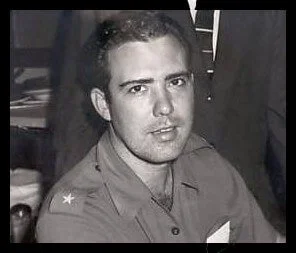
Rolando CUBELA SECADES/ AMLASH-1
Whitten learned in time some of the Agency’s own lead officers even failed to cooperate with his prior inquires. One specific instance was regarding the AMLASH plots targeting Fidel Castro with assassination. A list of names provided for Whitten’s review just two days after the murder of President Kennedy had included Rolando Cubela, the primary AMLASH figure. Yet CIA leaders never advised him of this name’s “significance” or its related assassination plot.vii It was unthinkable a lead investigator was denied such relevant material but the CIA’s need to conceal their own questionable activities remained. John Whitten retired amid nineteen seventy “under cover” and understood not just his inquiry but entire career with CIA “would be denied” under a secrecy agreement.viii
He relocated to Austria and had no further official associations with the JFK case until congressional leaders requested his testimony. The House Select Committee on Assassinations (HSCA) “requested presence of John Whitten, retired CIA officer now residing in Vienna, to provide sworn testimony” about the Kennedy assassination.ix The Agency would allow this but only under the alias John Scelso. Whitten told congressional investigators about his initial report and that James Angleton defied his authority repeatedly while the CI Staff and FBI undermined his review.x The HSCA learned that Whitten had never been appraised of the CIA plots to assassinate Fidel Castro that were ongoing during the nineteen sixties. Following his testimony it seemed the case would not affect him further but more fear and disappointment lay in store for him.
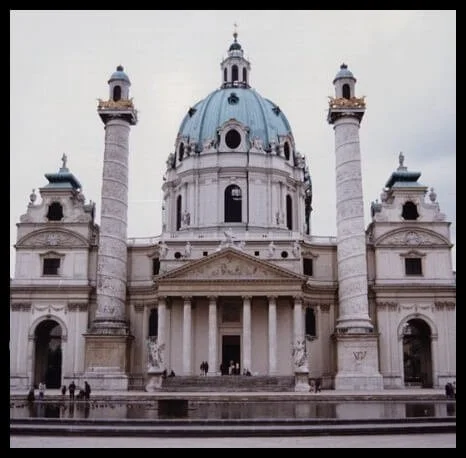
ST. Charles CHURch Vienna, Austria
John Whitten faithfully maintained his secrecy agreement and his loyal silence protected the CIA for decades. However, a subsequent congressional act to declassify the Kennedy case files over time could reveal him. A CIA representative with a staff member of the Assassination Records Review Board interviewed John at the US embassy in Vienna. It revealed he “was extremely worried and upset...on the verge of tears...He clearly felt hurt and betrayed” about the possible release of his true name. Whitten’s was paralyzed on his left side and believed his safety was threatened “should his affiliation with the CIA become known.”xi He made it clear he was physically defenseless and described multiple groups near his Austrian home that were Agency enemies. He also had lied on his application for residency to protect his past intelligence work and that could destroy the life he built for decades. The Assassination Records Review Board would decide to withhold John Whitten’s name until his death or after five years passed.xii
Whitten contacted his case officer referred to as “Noblehorse” months later and reported his life was falling apart. After considering suicide he traveled alone to the Netherlands to do so with state assistance and this poisoned his family relationships. “His wife of 55 years had deserted him...and was suing him for one third of everything he owned…” after she moved back to the US. John Whitten’s children had sided with her and if he returned to America they planned on leaving him in a nursing home, a fate he would rather die than face. John offered Noblehorse information the “Station believes will be of little or no useful value”. Whitten’s case officer informed him that “for security considerations, it would be best if he no longer contacted” him “except in the event of an emergency.”xiii Whitten told Noblehorse if he lost the legal battle with his wife it would financially ruin him and end his ability to stay in Vienna. The Whitten family’s legal maneuvers apparently succeeded and this notable CIA officer died in a Pennsylvania nursing home two years before his name was publicly declassified.xiv
Sincerely,
C.A.A. Savastano
References
i. David Robarge, September 2013, Studies in Intelligence, Volume 57, Number 3, DCI John McCone and the Assassination of President John F. Kennedy, Central Intelligence Agency, George Washington University, National Security Archive, Document 26, nsarchive2.gwu.edu, pp. 5-6
ii. Central Intelligence Agency, Oswald 201 File (201-289248), First Draft of Initial Report On GPFLOOR Case, Subject: Lee Oswald’s Visit to Mexico City, p. 2, National Archives Records Administration Identification Number: 104-10019-10021
iii. Ibid p. 10
iv. United States Senate Select Committee to Study Governmental Operations with Respect To Intelligence Activities, Executive Session, Testimony of Samuel Halpern, April 22, 1976, p. 29, NARA ID: 157-10014-10008
v. David Robarge, Studies in Intelligence, Vol. 57, No. 3, p. 6
vi. Ibid, p. 7
vii. US Senate Select Committee to Study Governmental Operations, Relating To “Book V” of Church Committee, Box 441, 1976, p.3, NARA ID: 157-10008-10253
viii. Central Intelligence Agency, Chief of Office of Central Cover Eric L. Qualkenbush, Memo for the Assassination Records Review Board, Proposed CIA Name Release, December 7, 1995, pp. 1-2, NARA ID: 104-10330-10044
ix. Central Intelligence Agency, Memo to Vienna, May 1978, NARA ID: 104-10065-10364
x. House Select Committee on Assassinations, Executive Session, Testimony of John Scelso, pp. 5-22,31, 33, 36-37, 40, NARA ID: 157-10014-10083
xi. Central Intelligence Agency, Project Files, Restricted, Meeting between JFK Board Attorney and John Whitten, April 1996, NARA ID: 104-10326-10049
xii. Assassinations Records Review Board, Electronic Files of Shared Administrative Folder, Cathy_Petes.BST, First Draft of Final Report, Chapter 4, June 25, 1998, “John Scelso”, p. 26
xiii. Central Intelligence Agency, Memo to the Director, Subject: Eyes Only–Meeting with John Whitten, September 1996, pp. 1-4, NARA ID: 104-10326-10046
xiv. Jefferson Morley, December 1, 2003, “The Good Spy”, Washington Monthly Magazine, washingtonmonthly.com
Related Articles
Down and Out in Mexico City
Other Men in Mexico City
Other Men in Mexico City II